IT'S TIME TO

CHANGE THE

CODE

Around the world, young people are already responding to crises in their communities, leading efforts on the frontlines of humanitarian action. Yet the systems that shape policy and funding rarely reflect their leadership.

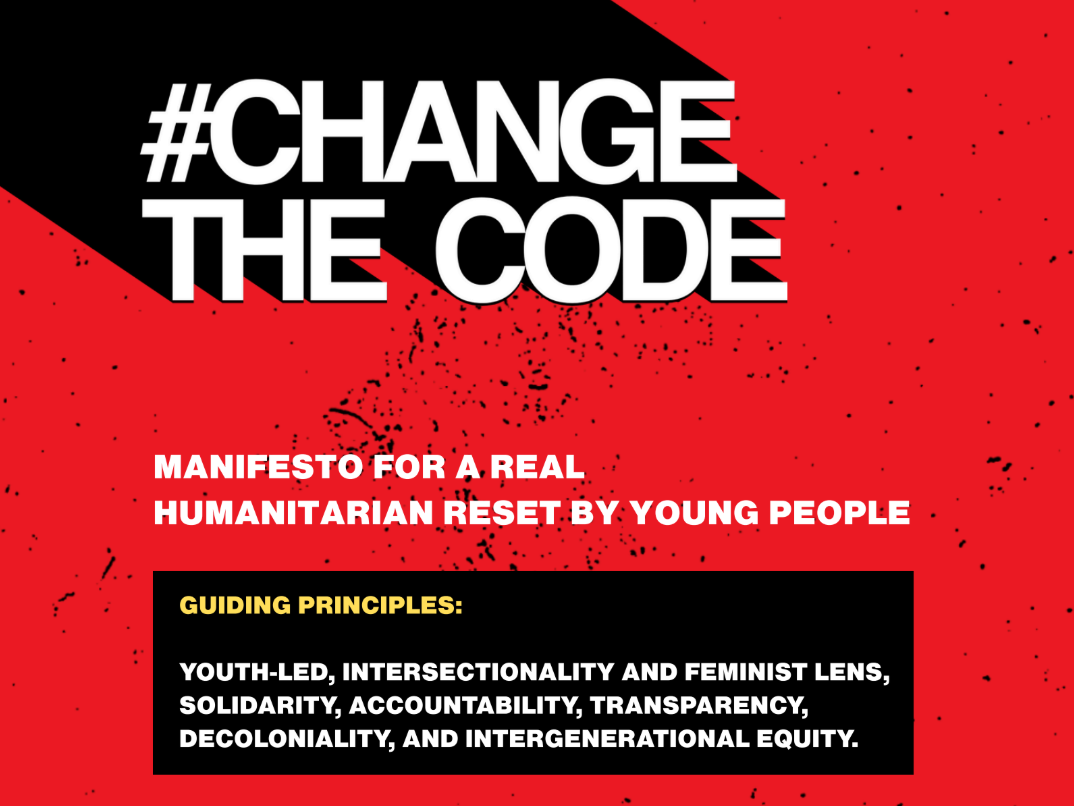
Change the Code brings together youth leaders, networks, and partners to ensure those closest to the work are not just included, but actively shaping how the humanitarian system operates.

Our Community

Manifesto Endorsements
0 +
More Than First Responder Members
50 +
Countries
0
  • Real voices. Real impact.

The Global Consensus

  • Stories that matter now

Latest NewsLETTERS

Take actionPower Must Reflect PracticeFrom Participation to PowerDemand InclusivityRedefine the SystemBuilding Collective PowerLeadership Is Not Optional

Shift the PowerChange the CodeVoices Shape DecisionsDemand accountabilityProtect the FutureCenter the FrontlinesGet Involved

“We’re not here to be quiet. We’re here to build, disrupt, and demand a future that works for all of us.”

FOLLOW CTC ON LINKEDIN

Time evolves rapidly, and without young people, the humanitarian system loses its ability to adapt to change, remain relevant, and respond effectively to the challenges of today and tomorrow.

12 Months of Activism, UK

When young people are excluded, the humanitarian system loses trust, innovation, and real-time community intelligence, resulting in weaker accountability, slower response, and interventions that are less relevant to the needs and realities of crisis-affected populations.

Ignoring young people costs the humanitarian system its most vital frontline data, innovative agility, and long-term sustainability, resulting in a disconnected, top-down architecture that fails to address the actual survival needs and future resilience of the world’s largest and most affected demographic.

Young people are not just tomorrow's leaders, they are today's frontline responders, most affected populations, and most innovative problem-solvers, making their inclusion in the Humanitarian Reset essential for building systems that are relevant, accountable, and resilient enough to address the crises they will inherit.