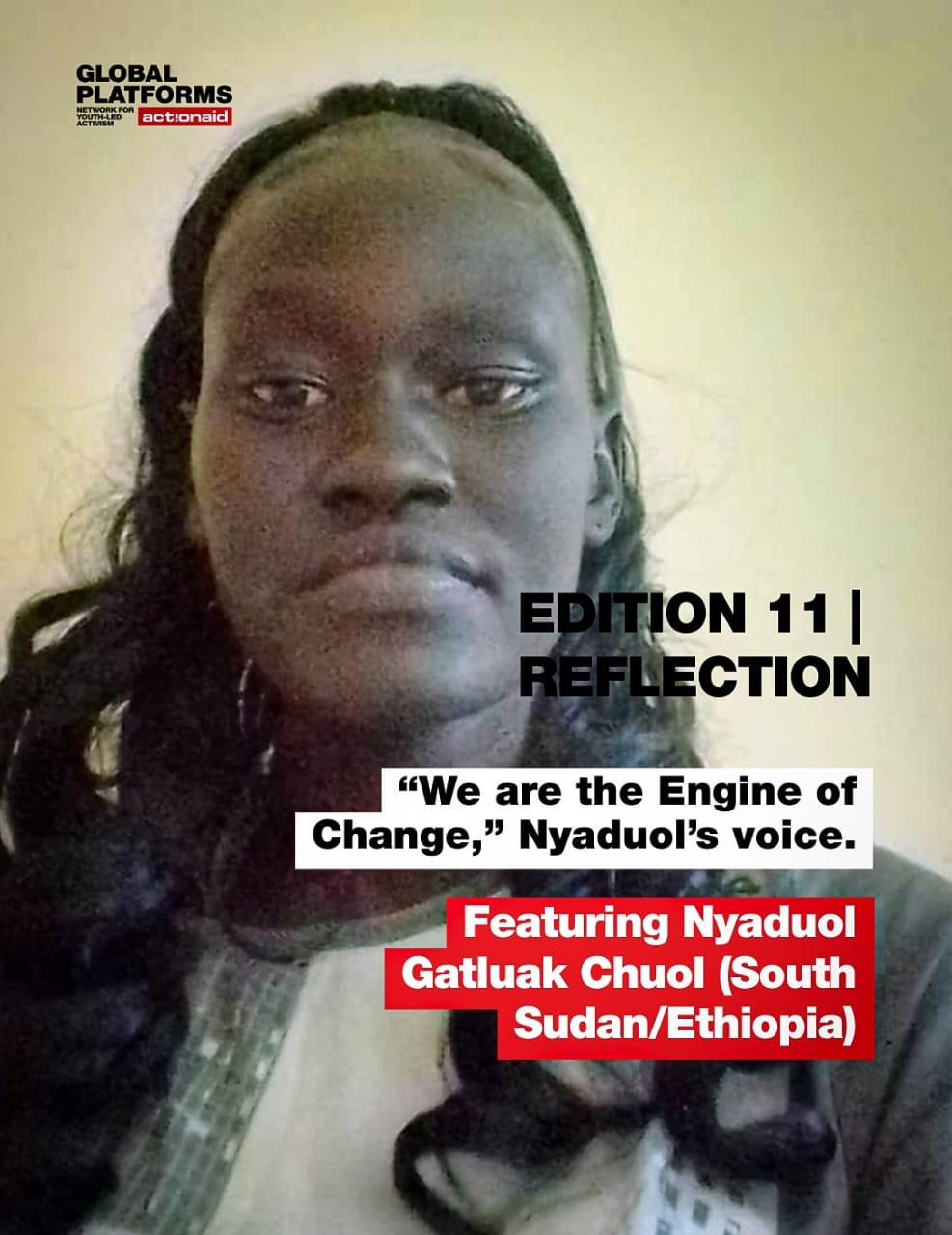
This week, we spotlight Nyaduol Gatluak Chuol, a young South Sudanese woman living in Nguenyyiel Refugee Camp in Gambella, Ethiopia.

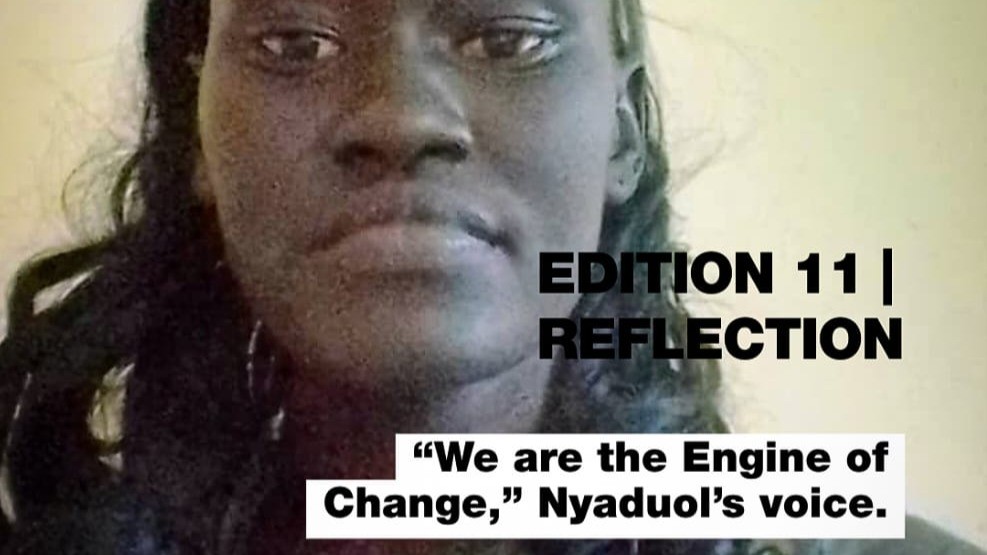
Featuring Nyaduol Gatluak Chuol (South Sudan / Ethiopia)
Young refugee women are not waiting to be defined by crisis. They are defining leadership in the very spaces where they were forced to rebuild their lives.
This week, we spotlight Nyaduol Gatluak Chuol, a young South Sudanese woman living in Nguenyyiel Refugee Camp in Gambella, Ethiopia.
Nyaduol arrived in Ethiopia in 2016, forced to flee South Sudan due to armed conflict. Displacement was not her choice; it was a consequence of violence. Since then, she has rebuilt her life in Ethiopia and stepped into leadership as a Youth Advisory Panel member working with Plan International in Ethiopia.
Her role is clear:
To make sure the rights of young people are heard and that they are actively engaged.
And she believes deeply that:
“Young people are not just recipients of the service, but the engine of change.”
Life in the Camp and Choosing Leadership
Living in a refugee camp brings many challenges. Nyaduol explains that pursuing your dreams while being labelled a refugee can make people question your potential.
But she refused to give up.
Over the years, she has travelled to other countries to represent her peers and show the global community that refugee youth are ready – ready to lead, ready to speak, and ready to shape decisions.
Changing What “Normal” Looks Like for Girls
When Nyaduol first arrived at the camp, the situation for girls and young women was very different.
There were significant challenges related to cultural norms and lack of resources. Early and forced marriage was common. Some people viewed girls as property rather than individuals with rights. Gender inequality and domestic violence prevented many girls from reaching their full potential.
Through collaboration with local organisations and Plan International, Nyaduol and her peers began working on change.
They:
- Trained women to participate in decision-making and leadership spaces
- Established coordination mechanisms between women leaders and NGOs – the first time women in the camp were directly involved with stakeholders
- Promoted gender equality and inclusivity within community structures
Today, she says, “it has changed- not like before.”
Women are increasingly taking leadership roles, and their voices are more visible in community discussions.
Education as a Pathway Forward
In Ethiopia, education has become one of the most important opportunities for refugee youth.
After passing the Grade 12 national examination, students can join universities in different regions across Ethiopia. There is some scholarship support for refugee students through UNHCR, implemented by organisations such as Finn Church Aid (FCA). For those who do not pass, remedial programmes provide another pathway.
For Nyaduol, education represents dignity, independence, and long-term transformation.
Gender Equality and Community Context
Nyaduol believes humanitarian actors are committed but implementation must be thoughtful.
“If they want to implement action, let them consider gender equality. This is very important. But first, let them understand the community context.”
For her, promoting gender equality must go hand-in-hand with understanding culture, realities, and lived experiences. Change cannot be imposed, but it must be built with the community.
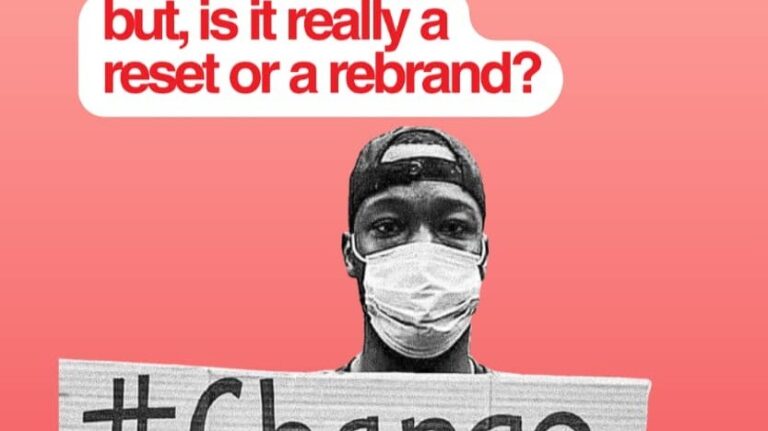
Resetting the Humanitarian System
When conversations turn to the “Humanitarian Reset,” Nyaduol’s message is practical:
Youth must not only be invited to activities – they must be supported when opportunities arise.
“Shaping the skills of young people is shaping the world as a whole.”
She calls on humanitarian actors to move beyond involvement and ensure youth are supported to build leadership, education, and long-term independence.
A Message to Young Refugee Women
To other young women facing displacement, uncertainty, or doubt, Nyaduol says:
“Never give up. Follow your dreams even if it’s hard and stay positive no matter the background.”
Her story reminds us that refugee youth are not waiting at the margins. They are leading, and the humanitarian system must match their courage with opportunities.
From Stories to Global Action
Nyaduol’s journey from forced displacement in 2016 to leadership in Nguenyyiel Refugee Camp reminds us that youth are already shaping humanitarian realities on the ground.
Now, the global humanitarian community has an opportunity to listen.
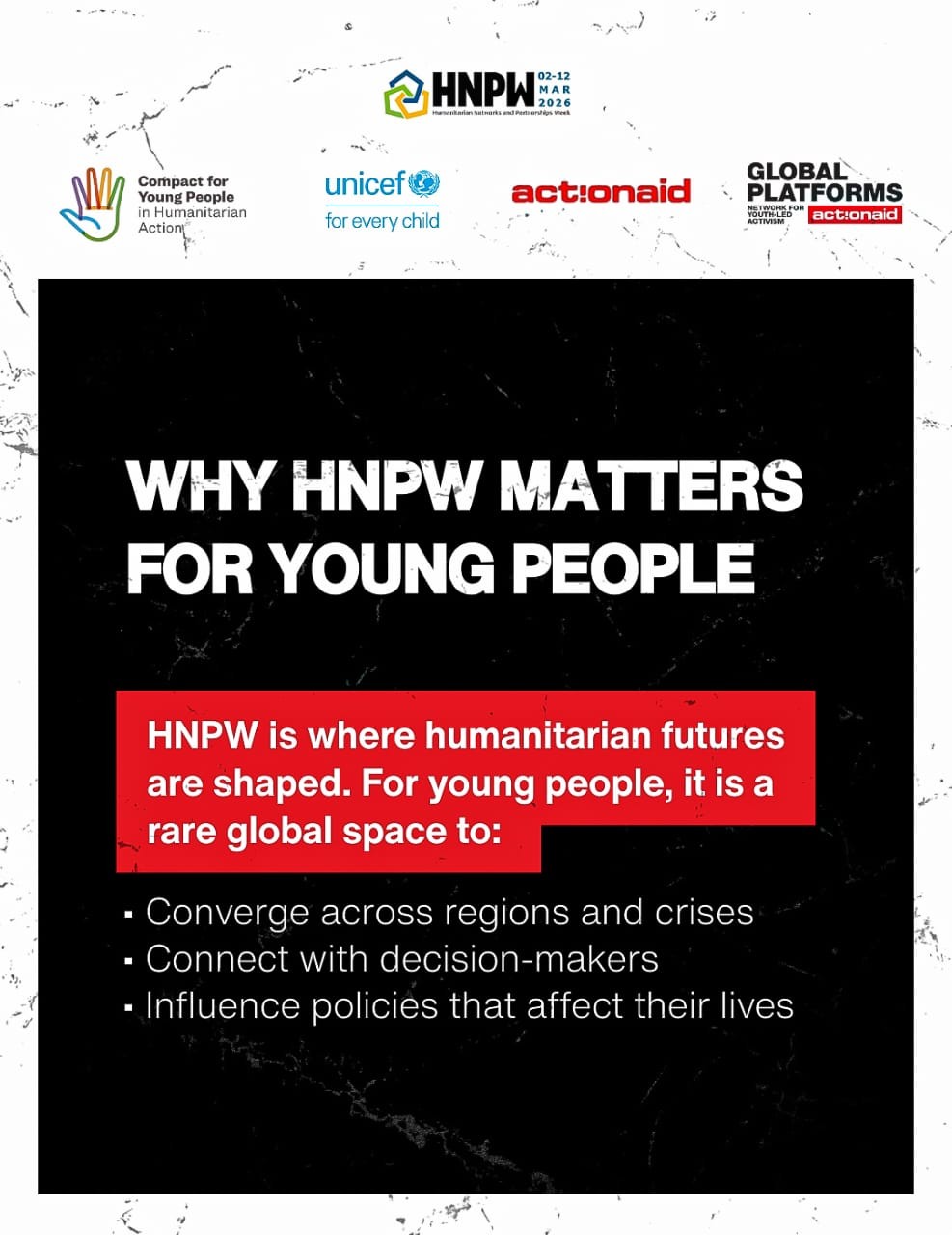
🌍 HNPW 2026 is coming.
Young people from across the world are preparing to converge, connect, and shape the future of humanitarian action. Speakers from different crisis contexts will share their stories, experiences, and bold ideas for change.
This year’s focus, “Localising Humanitarian Action: With, For, and By Young People,” speaks directly to what Nyaduol and many others are calling for: meaningful inclusion, leadership, and power-sharing.
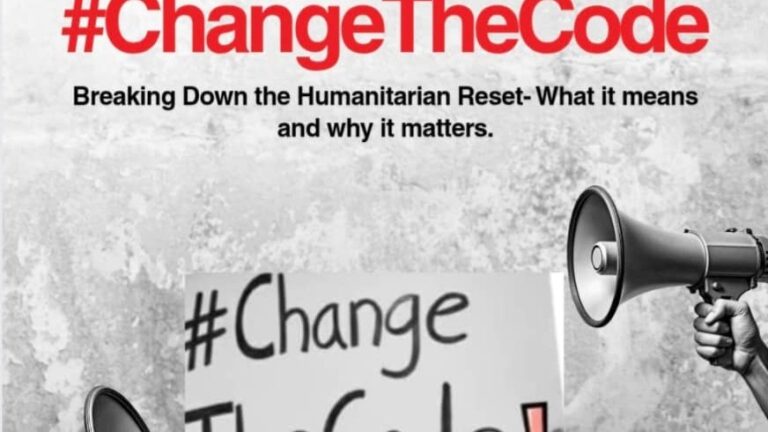
Some of our #ChangeTheCode representatives will be speaking at the event.
This is not a moment to observe from the sidelines.
👉 Register now and be part of the movement: https://us06web.zoom.us/meeting/register/PPnLeXQiSwCBQJIOt3nebA#/registration
The future of humanitarian action must be built with youth, not around them.