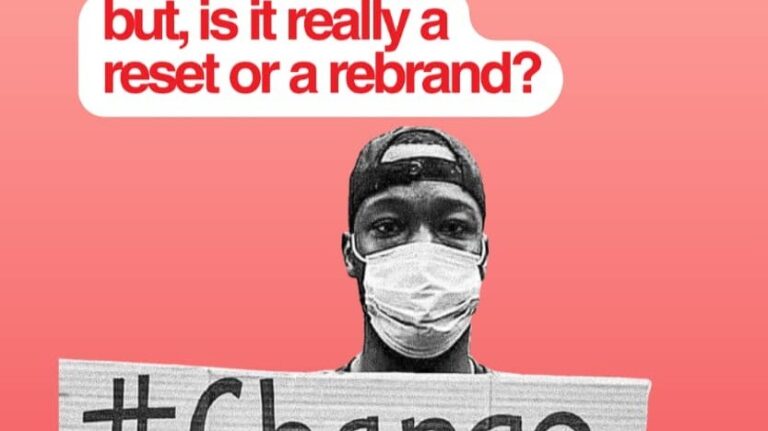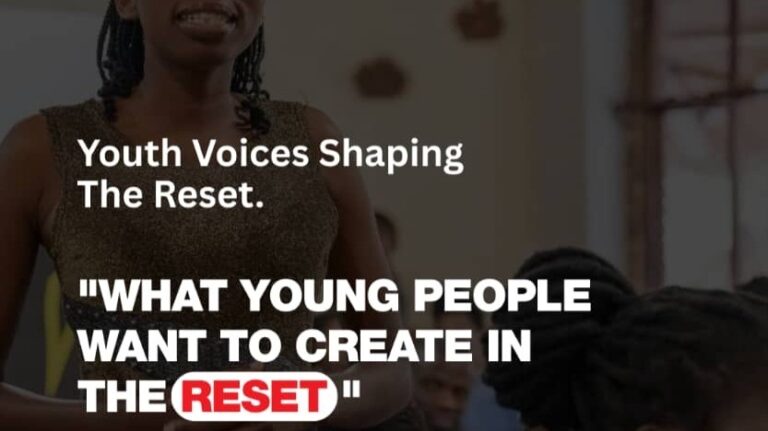
At the World Humanitarian Summit in Istanbul, leaders committed to transforming the way aid works – putting people at the centre and shifting power closer to those most affected by the crisis.

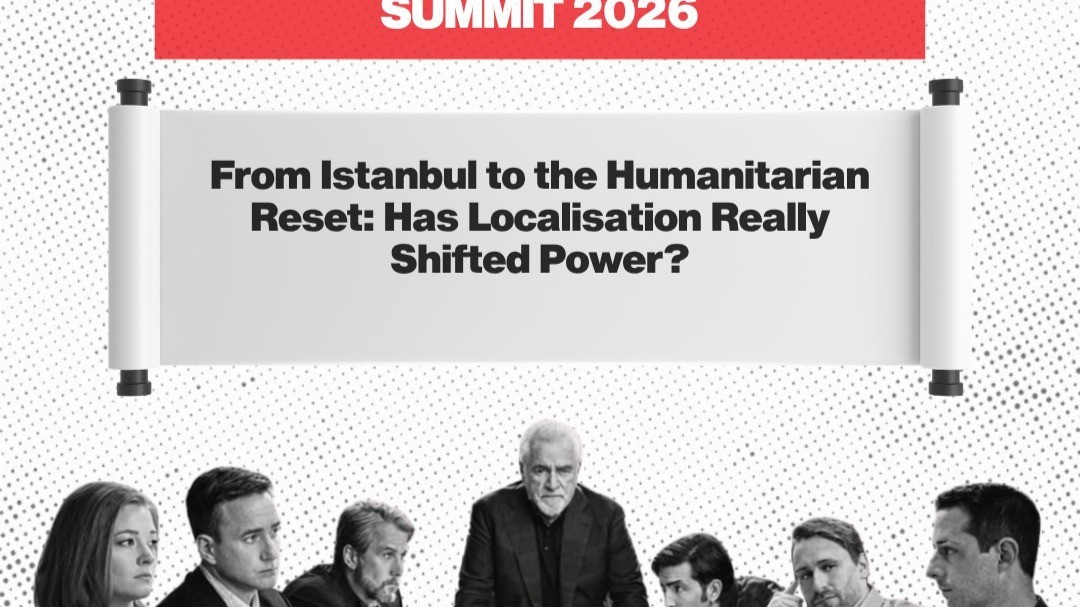
A #ChangeTheCode Special Edition
Ten years ago, the humanitarian system made a promise.
At the World Humanitarian Summit in Istanbul, leaders committed to transforming the way aid works – putting people at the centre and shifting power closer to those most affected by the crisis.
It was called a “Participation Revolution.”
And at the heart of it was one key idea: localisation.
What Was Promised
Through the Grand Bargain, donors and agencies committed to channelling at least 25% of humanitarian funding “as directly as possible” to local and national actors.
The message was clear:
- Decisions should be closer to communities
- Funding should reach frontline responders
- Local actors should not just implement – they should lead
For young people, this moment also sparked hope.
The Compact for Young People in Humanitarian Action and later the Inter Agency Standing Committee (IASC) Youth Guidelines reinforced a simple truth:
- Youth are not just beneficiaries.
- Youth are partners in humanitarian action.
Ten Years Later: What Has Changed?
There has been progress.
Local actors are more visible in conversations. Youth participation is now widely acknowledged – at least in principle. Policies and frameworks have evolved.
But when we look at the realities on the ground, a different picture emerges.
Across our #ChangeTheCode campaign conversations with over 100 young humanitarians:
- Youth are still not in decision-making spaces
- Direct funding to youth-led and local organisations remains extremely limited
- Participation is often consultative, not transformative
We are still asking: Why are we still discussing why youth should be included, instead of how?
Localisation Without Youth Is Incomplete
Localisation cannot be achieved without young people.
In crisis after crisis, from Sudan to displacement contexts to climate emergencies, youth are
- Running community kitchens
- Leading emergency response networks
- Supporting displaced families
- Coordinating local initiatives
And yet, they remain:
- Labelled as volunteers
- Excluded from funding flows
- Absent from decision-making tables
This is the contradiction at the heart of the system.
The system relies on youth – but does not invest in them.
Enter the Humanitarian Reset
Now, nearly a decade later, the system is once again at a turning point.
The Inter Agency Standing Committee has launched the Humanitarian Reset – an effort to make the system:
- Lighter
- More efficient
- More accountable
- More locally driven
It signals recognition that the current system is not working as it should.
But the question remains:
Will this reset finally shift power – or repeat the same patterns?
What Young People Are Saying
From our campaign and consultations, young people are clear:
- We don’t need more frameworks – we need implementation
- We don’t need to be consulted – we need to co-lead
- We don’t need symbolic inclusion – we need structural change
Localisation must mean:
- Direct access to funding
- Real participation in decision-making
- Recognition of youth as leaders, not just responders
From Reflection to Redesign
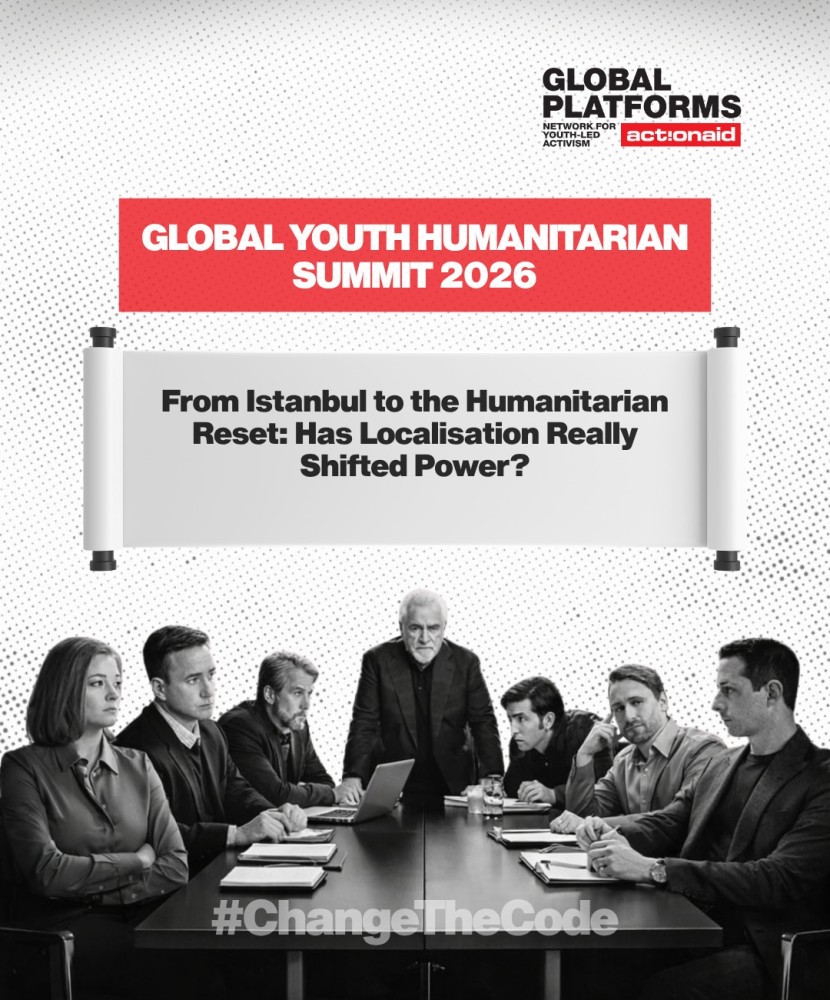
This is why the upcoming Global Youth Humanitarian Summit matters. Coming up on May 7, 2026
Convened by #ChangeTheCode and partners, the summit is not just another event.
It is a moment to
- Look back at what was promised in Istanbul
- Assess what has actually changed
- Co-design what the future must look like
From token consultation 👉 to structural co-leadership
From participation 👉 to power-sharing
The Real Question
Ten years after the World Humanitarian Summit, the question is no longer:
Should we localise?
The real question is:
👉 Who holds power in the humanitarian system – and who is still waiting outside the room?
A Call to Action
As the Humanitarian Reset unfolds, this is a critical moment.
Young people are already shaping humanitarian responses on the ground.
Now, the system must catch up.
The future of humanitarian action cannot be built around youth.
👉 It must be built with them.