Change starts with being there. Whether in the streets or online, showing up signals strength, support, and shared purpose.

As part of the #ChangeTheCode newsletter, we will continue to spotlight Youth voices and lived experiences shaping the Humanitarian Reset. But in between those stories, we’ll also share special editions that break down key policy moments and tools young people can use to push for real change.
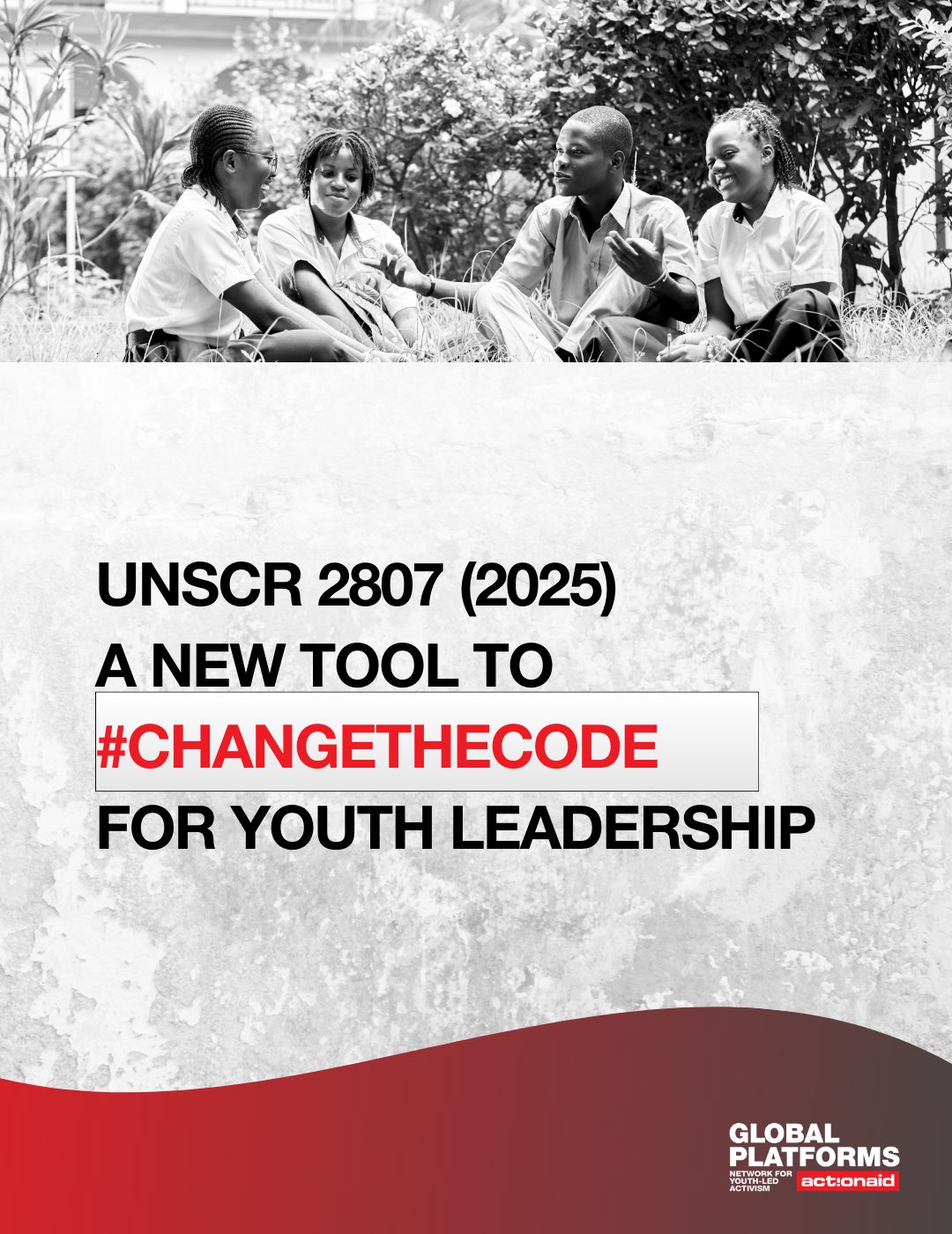
This week’s special edition is by Ciara Watson, unpacking a major development for youth leadership and accountability.
What is UN Security Council Resolution 2807 (2025)? Why we should celebrate, but also start planning ahead.
By Ciara Watson
In December 2025, the UN Security Council unanimously adopted Resolution 2807, calling for full, effective, safe, and meaningful youth participation and leadership in peace processes, conflict prevention, peacebuilding, recovery and reconstruction.
Unanimity matters: in a Council that rarely agrees, so this is a clear political commitment, on the record, to advance the youth, peace, and security agenda.
But it’s important to be honest: this resolution does not change realities overnight.
It does not automatically open doors for young people in peace talks, shift funding to youth-led initiatives, or institutionalise youth participation at national level.
What it does do is give us advocates something powerful to work with.
What does Resolution 2807 say?
- Reaffirms that youth participation must be meaningful, safe, and effective, not tokenistic
- Encourages Member States to adopt or strengthen national youth, peace, and security action plans
- Reinforces that youth are partners in peace, building on Resolution 2250 (2015)
In other words, it creates leverage.
This becomes an advocacy tool to say:
- You committed to this unanimously.
- Here is where youth are still excluded from decision-making.
- Here is how this commitment can be institutionalised in our national systems, peace processes, and funding frameworks.
As several delegates acknowledged, young people are often “outside the door clamoring to be heard and seen”, while budget cuts and institutional processes risk sidelining this agenda even further.
Resolutions like this help shift the conversation from whether youth should be involved to HOW institutions are implementing what they have already agreed to.
Now, the real work happens beyond New York: in national action plans, in peace processes, in funding youth-led initiatives, and in holding institutions accountable to what THEY committed to.
This is not the finish line. It’s a tool. What matters now is how we use it
Thanks for reading, subscribe, share your thoughts below and follow Change The Code Page for more Updates and engagement.