Liberation means lifting those at the margins. Justice begins when the most vulnerable are heard.

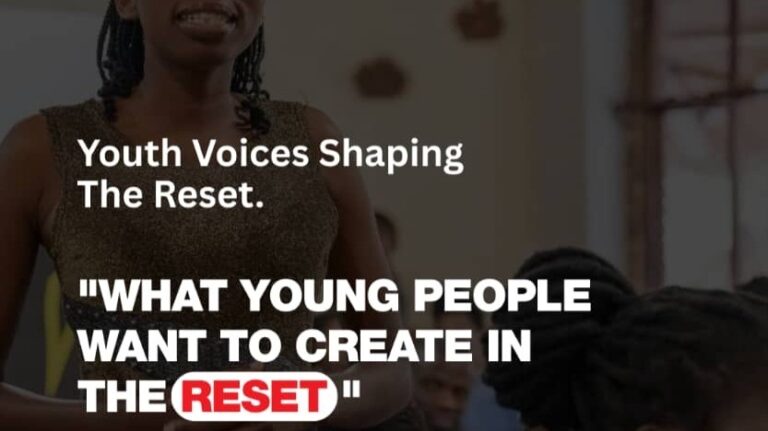
As part of the #ChangeTheCode campaign, young people are stepping into regional humanitarian and development spaces and carrying youth-led demands for a more inclusive, people-driven humanitarian reset.
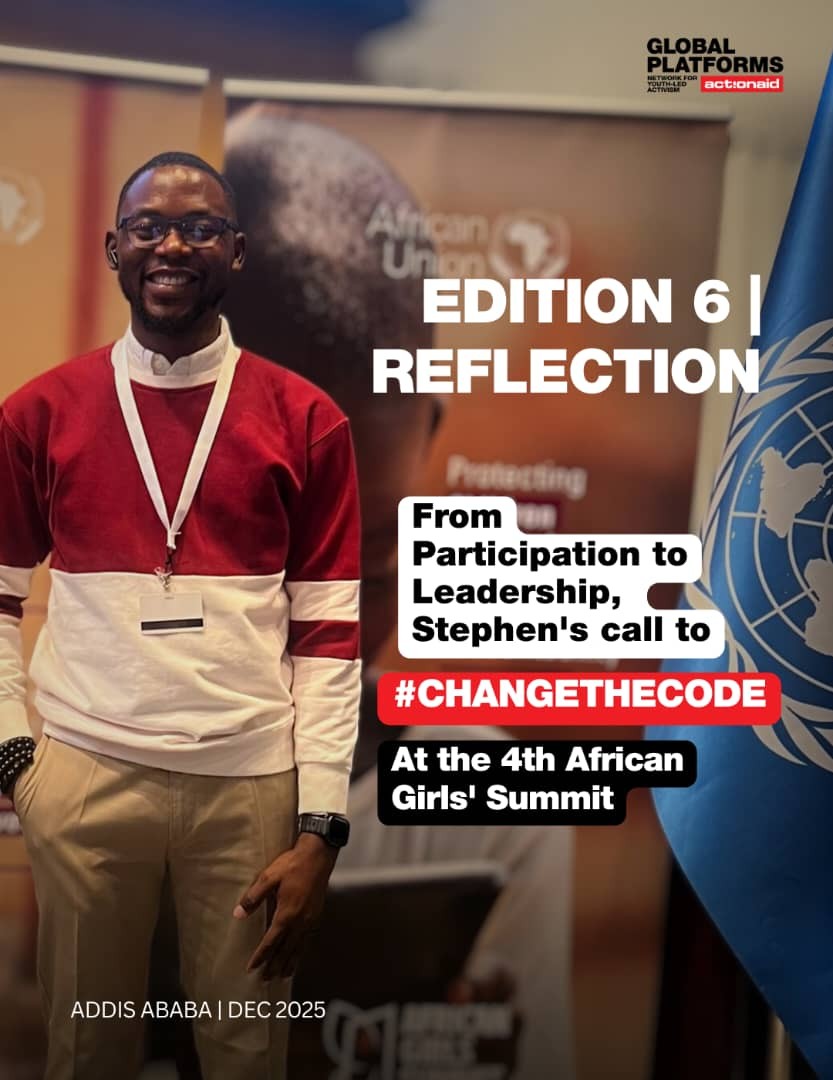
This edition shares reflections from Stephen, following his participation in the 4th African Girls’ Summit in Addis Ababa. His experience offers a clear window into how youth leadership is being recognised and where humanitarian conversations still fall short in high-level regional spaces.
Stephens reflections;
The summit was convened by the African Union Commission, and young people were not only present but they were shaping the conversation.
Stephen used the opportunity to speak about the campaign and to call on more young people to join a growing movement demanding a humanitarian reset that is inclusive, accountable, and grounded in lived realities.
One powerful moment from the summit was when Stephen’s colleague Salihu, alongside other young leaders, presented the draft outcome statement – a collective commitment by Member States, the African Union, development partners, traditional and religious leaders, civil society, and youth – outlining a concrete and accountable framework for empowering young girls in Africa.
This moment signalled that youth were not present as beneficiaries, but as contributors shaping shared commitments.
Why youth leadership matters
For Stephen, youth presence in spaces like this is critical because young people bring ground-level experience that policy discussions often miss. At the summit, youth were positioned as presenters, panellists, and thought leaders, a meaningful shift from symbolic participation to youth leadership.
This was particularly visible during the menstrual dignity panel, which, as Stephen noted, “centred youth voices authentically, including perspectives from girls with disabilities and those in humanitarian contexts.”
For him, this stood out as an example of how youth inclusion can be meaningful when lived experiences are placed at the centre of the conversation.
Where the system still feels disconnected
At the same time, Stephen noticed a disconnect in some discussions. Conversations around “strengthening coordination mechanisms” and “continental architecture” often felt abstract when compared to the realities young people face in humanitarian settings – where immediate safety, trauma support, dignity, and continued education are urgent needs.
One moment clearly illustrated why #ChangeTheCode exists.
Panellists spoke about how displaced girls face menstrual stigma without access to basic supplies or private facilities, yet humanitarian responses continue to treat menstrual dignity as a “women’s issue” rather than a fundamental right. Girls miss school or remain in unsafe spaces simply because camps lack appropriate WASH facilities.
Carrying the campaign into the room
When Stephen introduced the #ChangeTheCode campaign, participants responded with interest and energy. However, he was struck by the limited awareness of the Humanitarian Reset itself, and of youth-led efforts pushing to shape it.
Representing the campaign on a continental stage was both affirming and sobering. It reinforced that youth-led, community-rooted approaches matter, while also underscoring a hard truth: visibility without follow-through is not enough.
A message to humanitarian leaders
Stephen’s message to humanitarian leaders is clear:
“Stop designing programs for youth and start designing with youth. Our lived experiences in humanitarian contexts aren’t stories to make reports compelling – they are expertise.”
He also calls for long-term, flexible funding to flow directly to youth-led organisations, for youth analysis to be trusted, and for success to be measured by real outcomes in communities, not just policy documents.
What this tells us about the Reset
Stephen’s reflections echo what young people across the #ChangeTheCode campaign continue to say: youth leadership is possible, visible, and impactful, but still too often treated as an exception rather than the norm.
If the Humanitarian Reset is to be meaningful, youth must be recognised as partners, leaders, and co-creators of humanitarian action now, not later.
Stay tuned for the next reflection on the recently concluded Asia-Pacific Regional Humanitarian Partnership Week event.