Social media can spark awareness—but turning clicks into real-world change takes strategy, unity, and sustained effort.

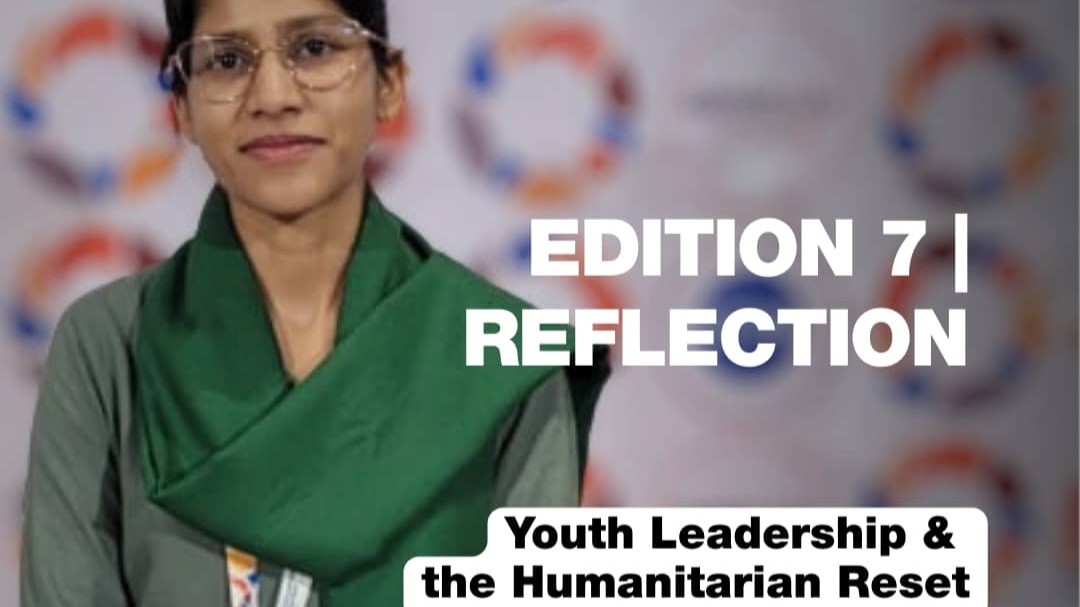
Jigyasa’s Reflections;
At the Regional Humanitarian Partnership Week (RHPW) 2025, held in Bangkok from 8th -10th December, conversations about the future of humanitarian action were everywhere, from localisation and financing to technology and climate justice. Among the participants was Jigyasa Gulati, representing the #ChangeTheCode campaign and Dignity in Difference, a South Asia-based youth-led organisation working on digital safety.
Jigyasa’s role was clear: to advocate for a youth-inclusive humanitarian reset and to challenge a system that continues to speak about young people without fully sharing power with them.
Reframing the question of youth inclusion
For Jigyasa, the starting point is not whether youth should be included at all.
As she put it, the real question is not “Why should youth be here?” but rather: “How can these spaces claim legitimacy when we are missing?”
From her perspective, this is not just a matter of fairness. Young people are already primary responders on the frontlines of climate shocks, conflict, and disaster risk. Designing policies without what she calls “the architectures of the future” at the table is not only exclusionary – it is a poor strategy.
Being heard – but not yet heeded
Across the three days, Jigyasa observed a visible shift: young people were present on podiums, sharing strong ideas and solutions. Leaders from INGOs, donors, private sector actors, and UN agencies spoke openly about the importance of youth inclusion.
Yet something remained stuck.
The conversation, she noted, continues to circle around why youth matter – rather than how to operationalise that value.
In her words: “We are drowning in frameworks like IASC and the Grand Bargain that already mandate youth inclusion; we don’t need more agreement but implementation.”
For Jigyasa, this creates a troubling gap: youth voices may be heard, but they are not yet being heeded.
A disconnect within localisation
One of the dominant themes at RHPW was localisation and decentralisation of power. But within those discussions, Jigyasa noticed a critical absence: youth leadership.
As a young professional with over five years of experience in the sector, she found it difficult to imagine true localisation without meaningful youth inclusion. Talking about decentralisation while sidelining youth leadership felt, to her, like a fundamental disconnect from reality.
Trapped in the “volunteer” box
Jigyasa also observed how youth continue to be framed within humanitarian discourse.
The system, she said, still places young people in a “volunteer box”, valued for enthusiasm, creativity, and labour, but rarely trusted with leadership, governance, or decision-making power. This framing implies that youth need constant mentorship and supervision, rather than investment to scale expertise that already exists.
She described this as a paternalistic narrative, one that denies youth agency while benefiting from their work.
A moment during a session on community solutions captured this tension clearly. Young speakers presented powerful ideas – yet the framing around them positioned youth as beneficiaries in need of guidance, not partners in need of investment.
For Jigyasa, this was a defining moment; the system is willing to let youth speak, but reluctant to let them lead.
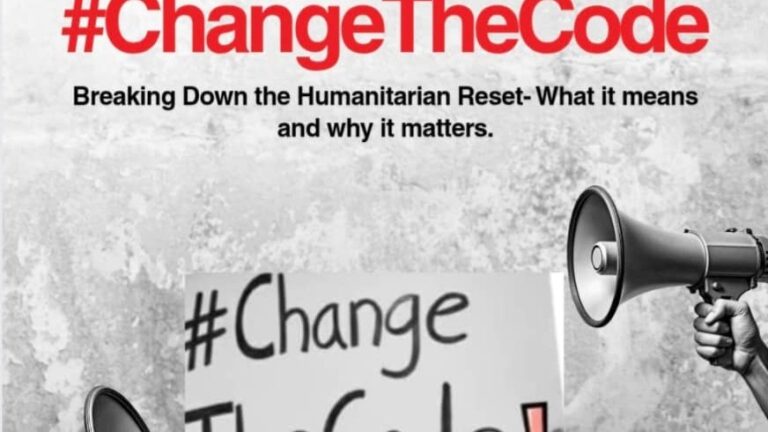
Representing #ChangeTheCode
When Jigyasa introduced the #ChangeTheCode campaign, there was broad agreement both on the problem and on what needs to change. What was missing was commitment.
She observed two underlying barriers:
- Local organisations are overwhelmed by internal restructuring and survival concerns.
- Larger actors – donors and INGOs face competing priorities and hesitate to be the first mover in shifting power and resources.
As she reflected, everyone wants to talk about youth inclusion, but far fewer are ready to open decision-making spaces and budgets to make it real.
Representing the campaign at a regional platform brought a mix of pride and urgency. Pride in holding a mandate for youth voices in the room. Urgency in recognising how few young people were present and how often they were still seen primarily as volunteers.
As she put it, if youth do not push now, “The Reset will happen without us, and the window will close, once again.”
A message to humanitarian leaders
Jigyasa’s message to humanitarian leaders is direct:
The Humanitarian Reset is a rare opportunity to correct long-standing flaws in the system. There is already enough evidence from UNSCR 2250 to the IASC youth guidance demonstrating the value of youth leadership.
“We cannot afford to keep piloting youth inclusion,” she said. “We need to institutionalise it.”
What this tells us about the Reset
Jigyasa leaves RHPW carrying both hope and frustration.
Hope because leaders across sectors are finally willing to have the conversation and frustration because a decade after the Grand Bargain, youth are still debating whether they belong, rather than where they sit.
Her reflections echo a growing message across the #ChangeTheCode campaign: The challenge is no longer listening. The challenge is power.
If we need a true change, institutionalise the participation of young humanitarians and youth-led organisations in the Humanitarian Reset. Include young people as separate stakeholders along with other groups like women and marginalised communities, and not within these groups. Recognise the system that reinforces stereotypes (young people as only beneficiaries) and actively take steps to dismantle them. Most importantly, pass the mic. Policy must be shaped by direct testimonies and not by interpretations and summarised consultations.
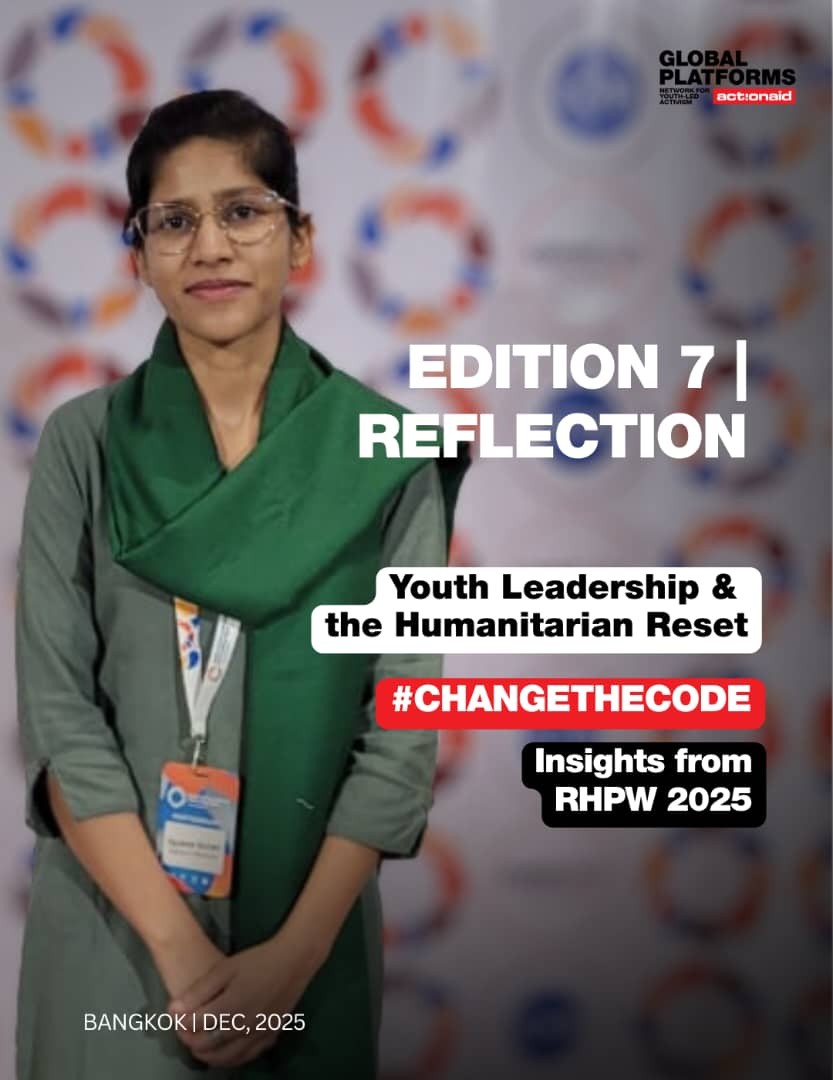
Just like Jigyasa, other young people across #ChangeTheCode Campaign are also asking for something similar- moving beyond consultation, sharing decision-making power, and investing directly in youth-led leadership.
Thanks for reading, and please do share what resonates with you or any other reflections via comments.
And follow our Campaign page to engage more with us.