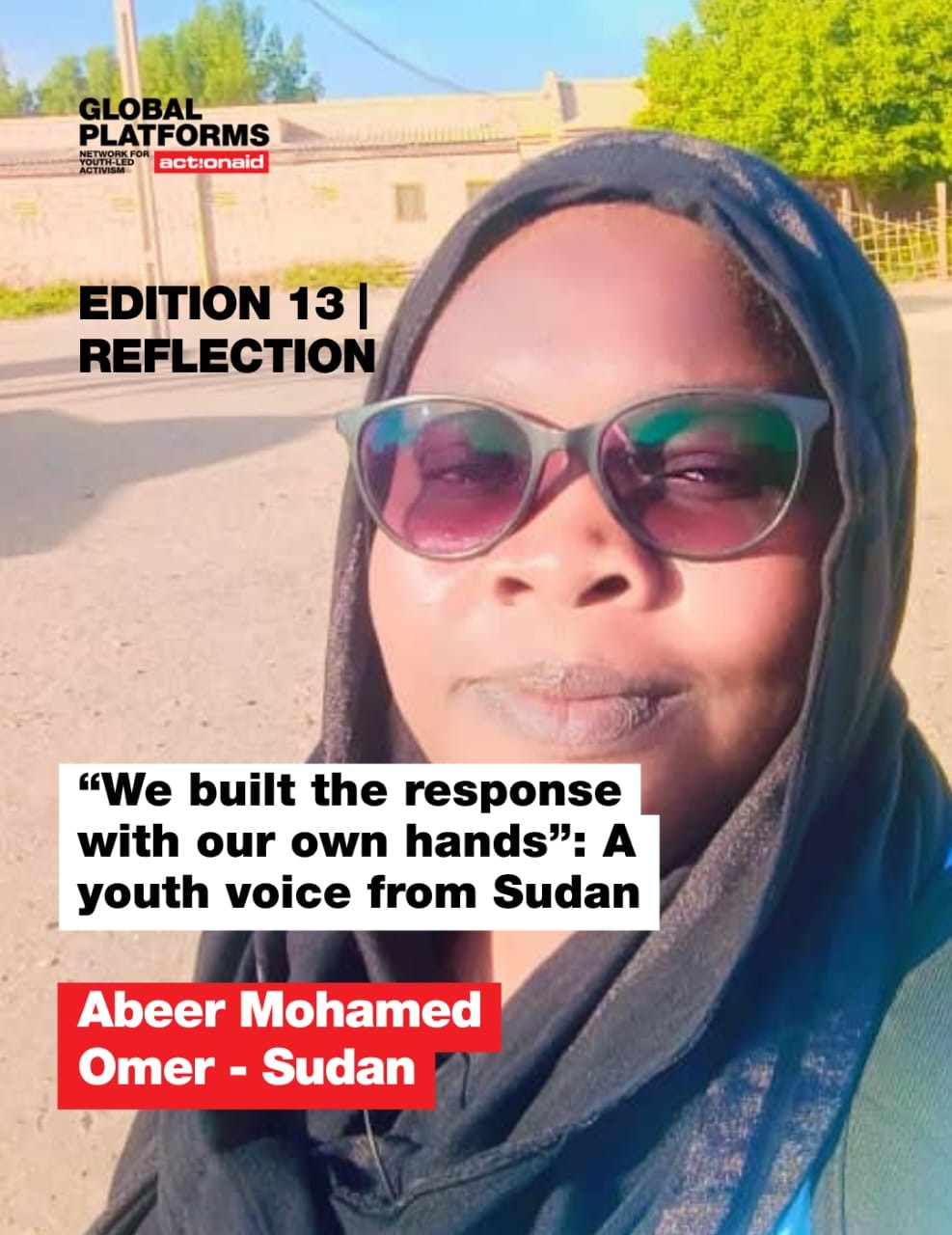
This week, we feature Abeer Mohamed Omer, a youth volunteer based in Atbara, River Nile State, who has been working at the frontline of Sudan’s community response since the early days of the war.

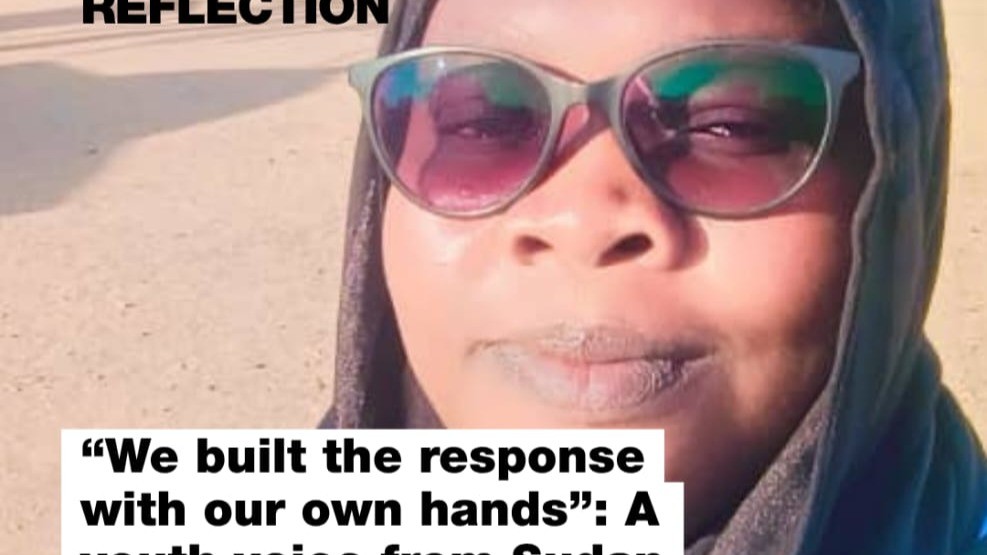
Featuring Abeer Mohamed Omer - Sudan
When the war erupted in Sudan in April 2023, communities did not wait for systems to arrive.
Young people stepped in.
This week, we feature Abeer Mohamed Omer, a youth volunteer based in Atbara, River Nile State, who has been working at the frontline of Sudan’s community response since the early days of the war.
Abeer currently volunteers at the Emergency Room in Atbara, where she serves as a focal point for programs and projects while also participating in several local, national, and regional youth initiatives.
For her, humanitarian response did not start in an office or conference room.
It started in a small emergency room created by young volunteers.
Featuring Abeer Mohamed Omer - Sudan
In the first week after the war began in 2023, Abeer and other young volunteers established a small emergency response space to receive people injured in the violence.
Over time, this small initiative evolved into a wider community response network.
Emergency rooms began spreading across different parts of Sudan, supporting both displaced families and host communities.
Today, the response includes:
- Providing food and shelter to displaced families
- Running community kitchens
- Supporting health referrals to hospitals
- Delivering first aid to injured civilians
Abeer’s day reflects the intensity of this work.
She often starts her morning in the community kitchen, helping prepare meals for displaced families.
Later in the day, she moves to the hospital, assisting patients and coordinating support for those near shelters housing thousands of displaced people.
Recently, pressure has increased even further.
After the fall of El Fasher in North Darfur, new displacement waves forced communities in Atbara to establish additional camps for newly arrived families.
A Crisis the World Is Not Fully Seeing
According to Abeer, the humanitarian situation inside Sudan has reached a catastrophic stage.
The crisis is not only humanitarian, but also economic, health-related, and psychological.
Many displacement camps were never designed to host such large numbers of people, leaving families without adequate services.
She explains that while international aid has entered Sudan, much of it does not reach those who need it most.
Corruption, bureaucratic procedures, and interference in aid distribution have created barriers that slow humanitarian response and prevent support from reaching communities.
“The monitoring systems are weak,” she says. “And this delays humanitarian work.”
How the War Has Impacted Sudanese Youth
For Sudanese youth, the war has created immense pressure both inside and outside the country.
Young people have been drawn into multiple realities:
- Some joined armed groups or military structures
- Some fled abroad seeking work to support their families
- Others became frontline humanitarian volunteers
Many young activists and humanitarian volunteers have also faced detention, arrest, torture, or forced disappearance.
At the same time, youth remain central to Sudan’s survival.
Despite these risks, young volunteers continue operating community initiatives, emergency kitchens, and local response networks across the country.
The work, however, comes with heavy consequences.
The crisis has affected youth psychologically, financially, and physically, yet they continue responding far beyond their capacity.
Youth Leading – But Not Recognised
Despite their central role, Abeer says young people are rarely treated as leaders in the humanitarian response.
Instead, they are often viewed simply as volunteers or assistants.
Yet she is clear about one reality:
Without youth leadership, many displaced families would have no support at all.
“If it were not for the youth and their role in humanitarian response,” she explains, “Many citizens and displaced people would have had no one to care for them.”
What the Humanitarian Response Is Missing
From Abeer’s perspective, one major gap is the lack of direct engagement with youth responders.
Young volunteers want the international community to hear their voices and understand their experiences on the ground.
While funding exists, access to it remains extremely difficult due to administrative barriers and structural challenges.
Youth-led responders need:
- Technical support
- Training in crisis response and protection
- Capacity-building in resource management
- Tools to support survivors and vulnerable communities
Because communities rely heavily on youth responders, she stresses that without proper training and support, their ability to respond is limited.
What Real Solidarity Would Look Like
For Abeer, solidarity is not simply sympathy.
It means creating opportunities for Sudanese youth to share their experiences and strengthen their skills.
She believes platforms that amplify youth voices, such as this one, are essential.
They allow young responders to speak about their resilience and the extraordinary challenges they face as Sudan’s crisis enters its third year.
“We do not want sympathy alone,” she says.
“We want action that protects our rights and dignity.”
Real solidarity means youth responders knowing they are not alone in this catastrophe.
Rethinking the Humanitarian System
When Abeer hears discussions about the Humanitarian Reset, she sees it as an opportunity to rethink humanitarian work entirely.
For her, resetting the system means reconnecting humanitarian practice with the values and principles that should guide it, rather than simply focusing on procedures and rules.
It also means strengthening protections for humanitarian actors and improving the way emergency responses are designed and implemented.
Most importantly, it means recognising the role youth already play.
A Message to Humanitarian Leaders
Abeer’s message to global humanitarian leaders is simple and direct.
Invest in youth. Train them. Support them. Create space for them to lead.
“Young people should be given more opportunities to present their ideas and share their voices globally,” she says.
Humanitarian leadership, she argues, should not remain concentrated in a few hands.
Youth must be included in decision-making spaces, not only in implementation roles.
Because in Sudan today, the humanitarian response is already built on their shoulders.